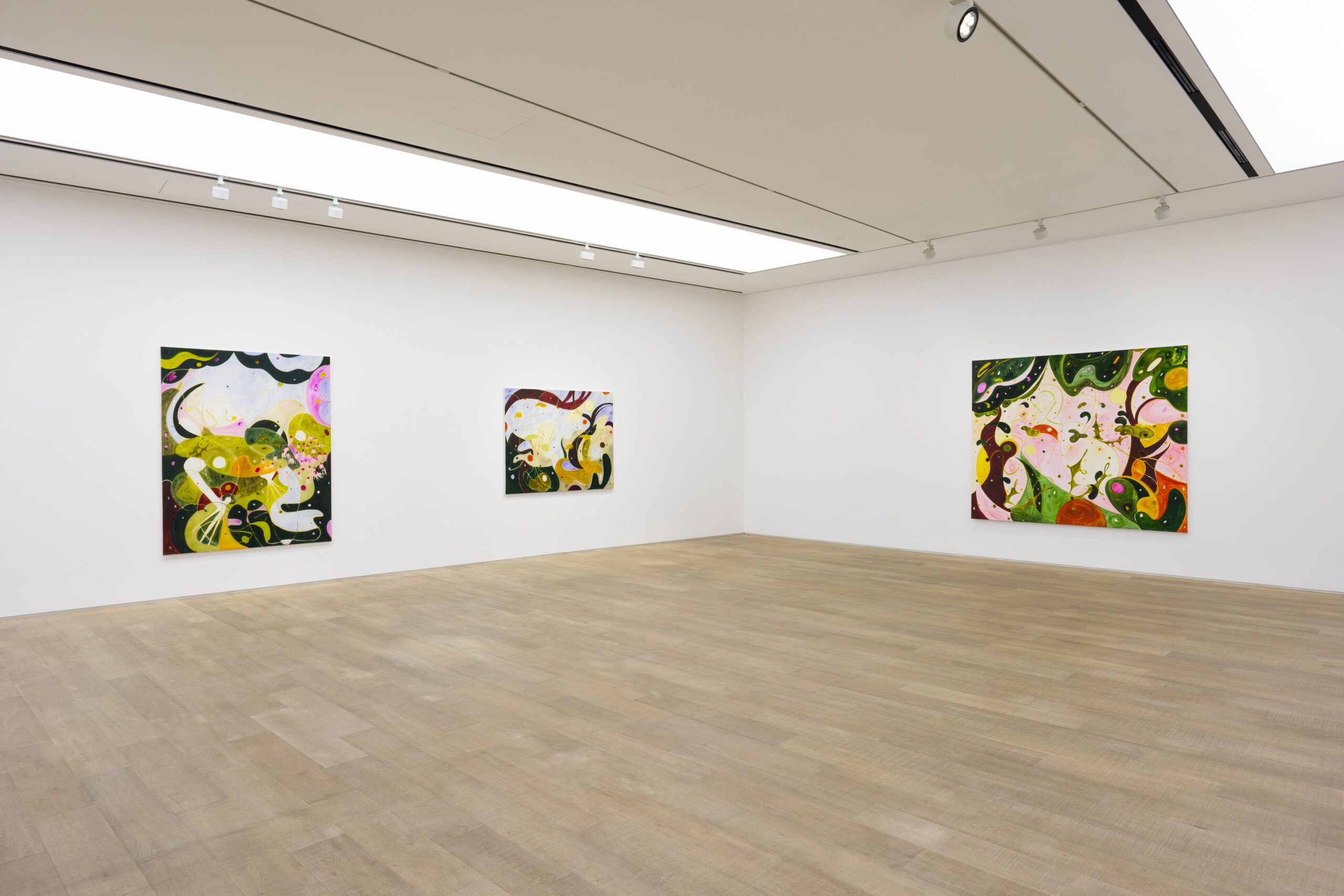
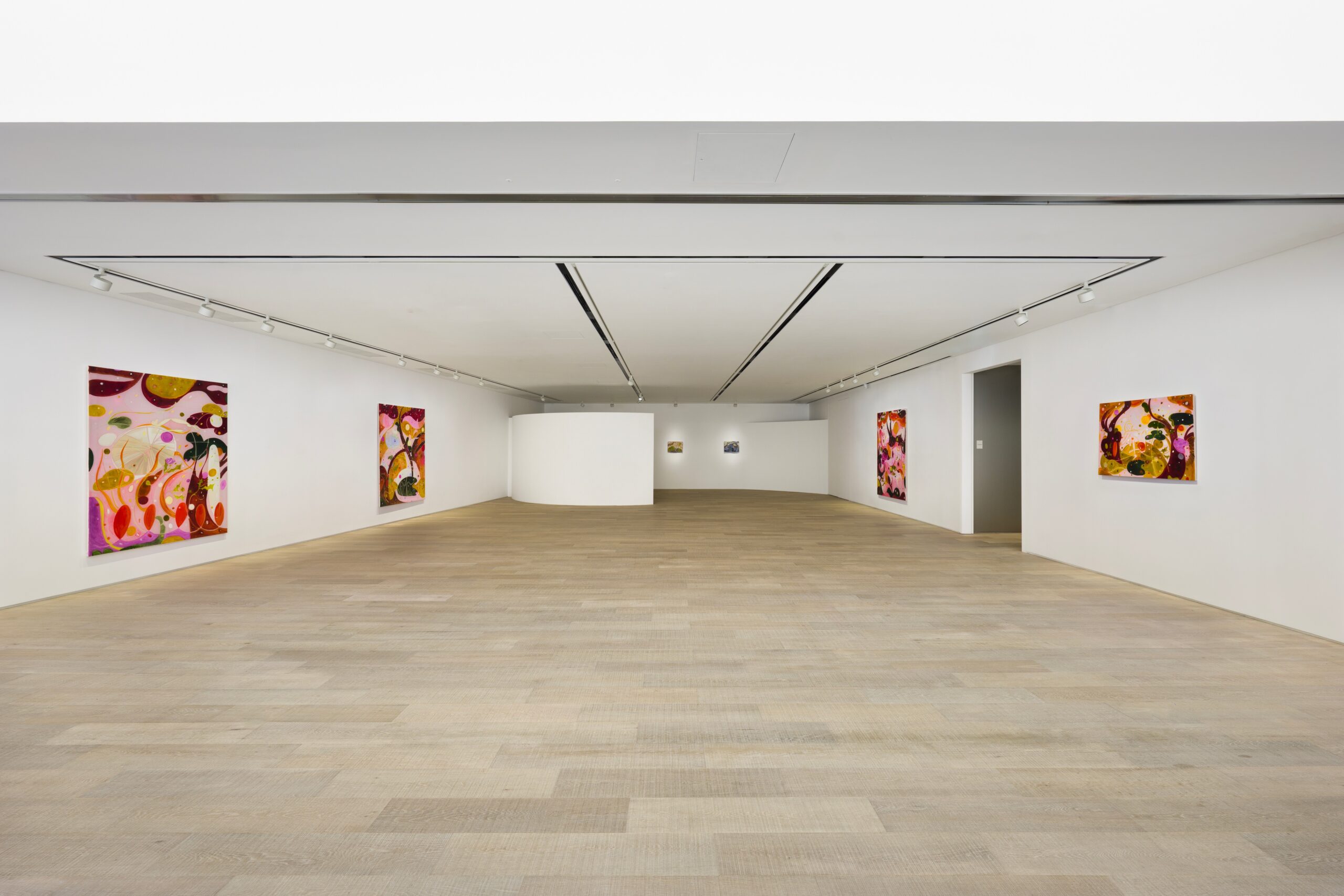
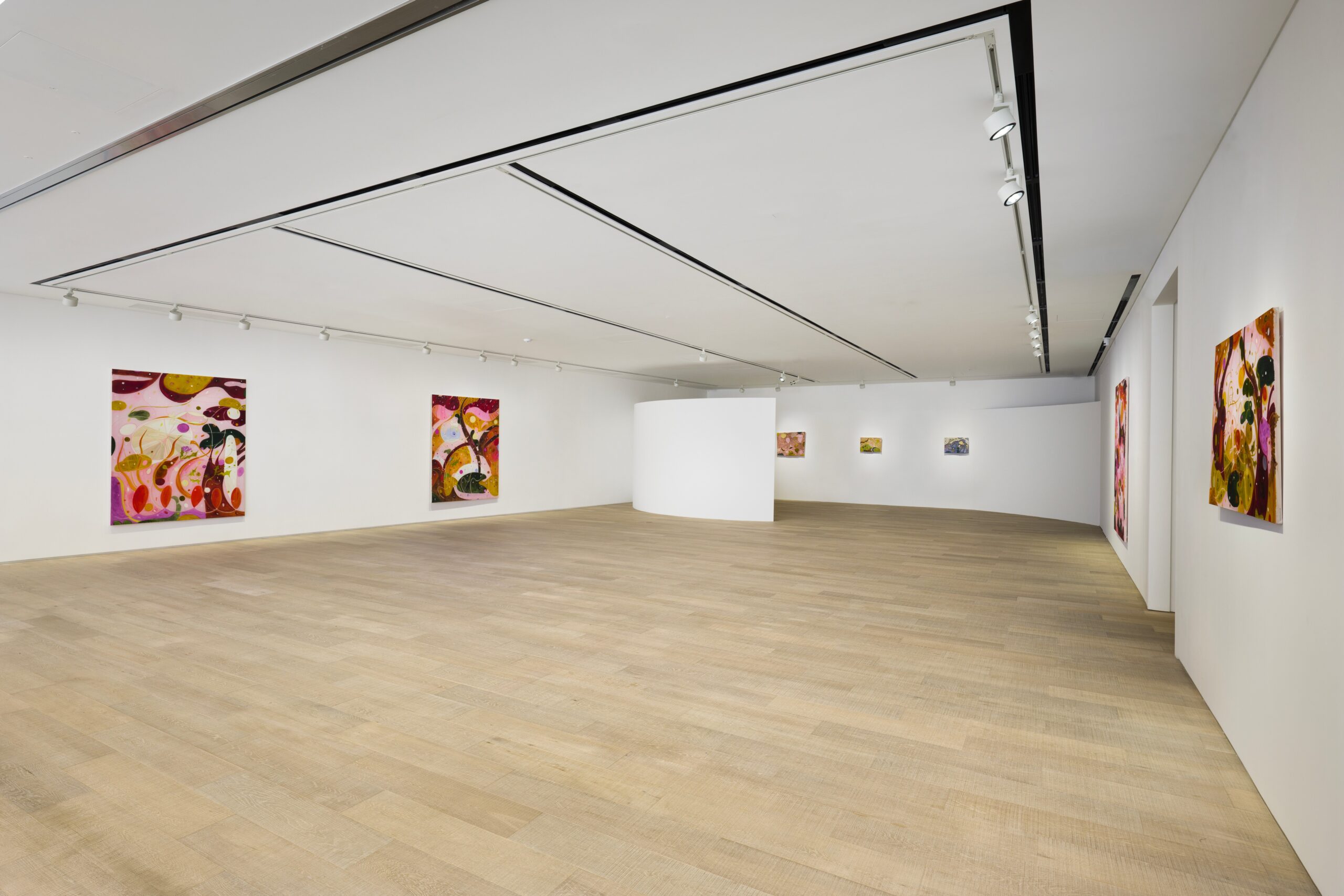
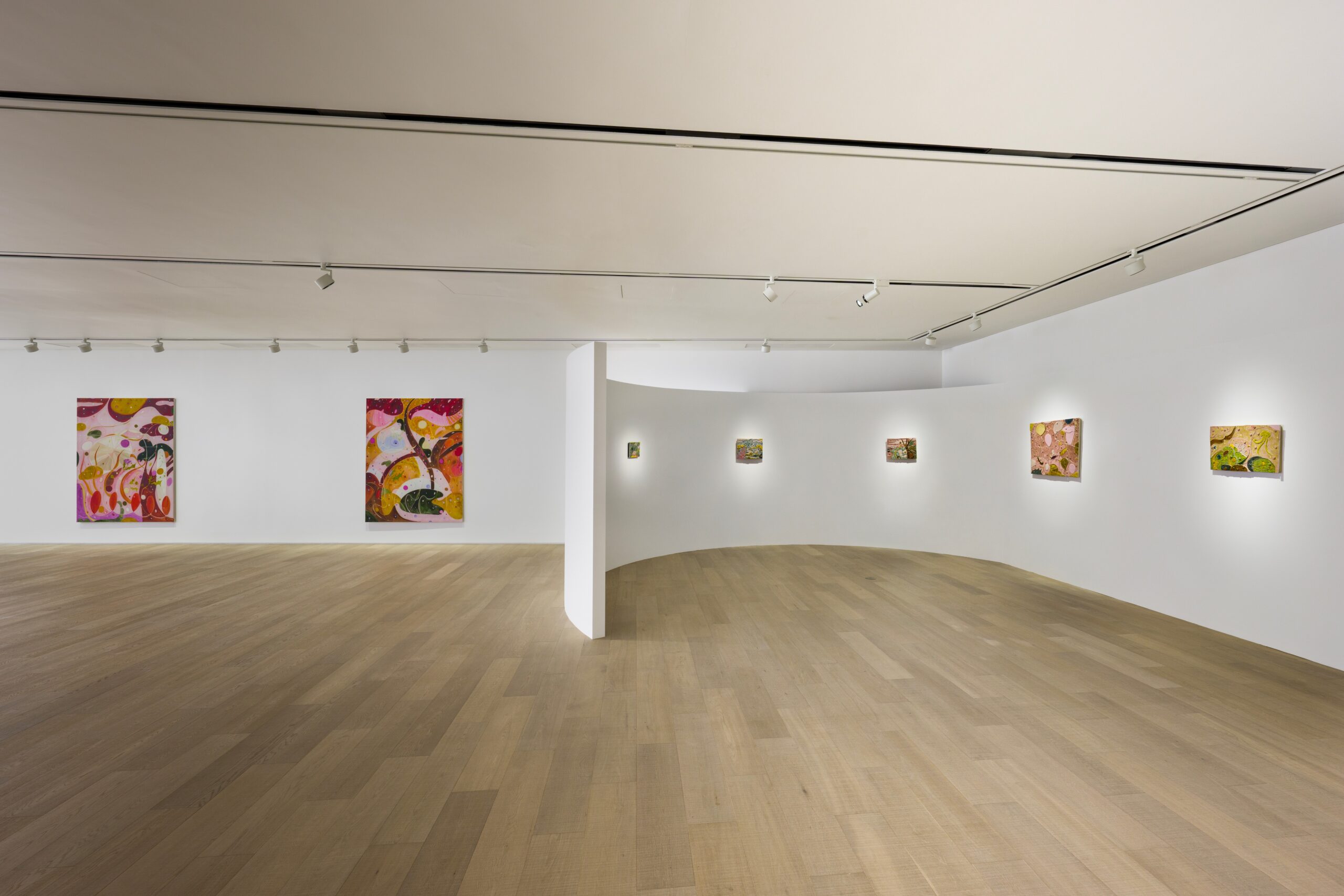
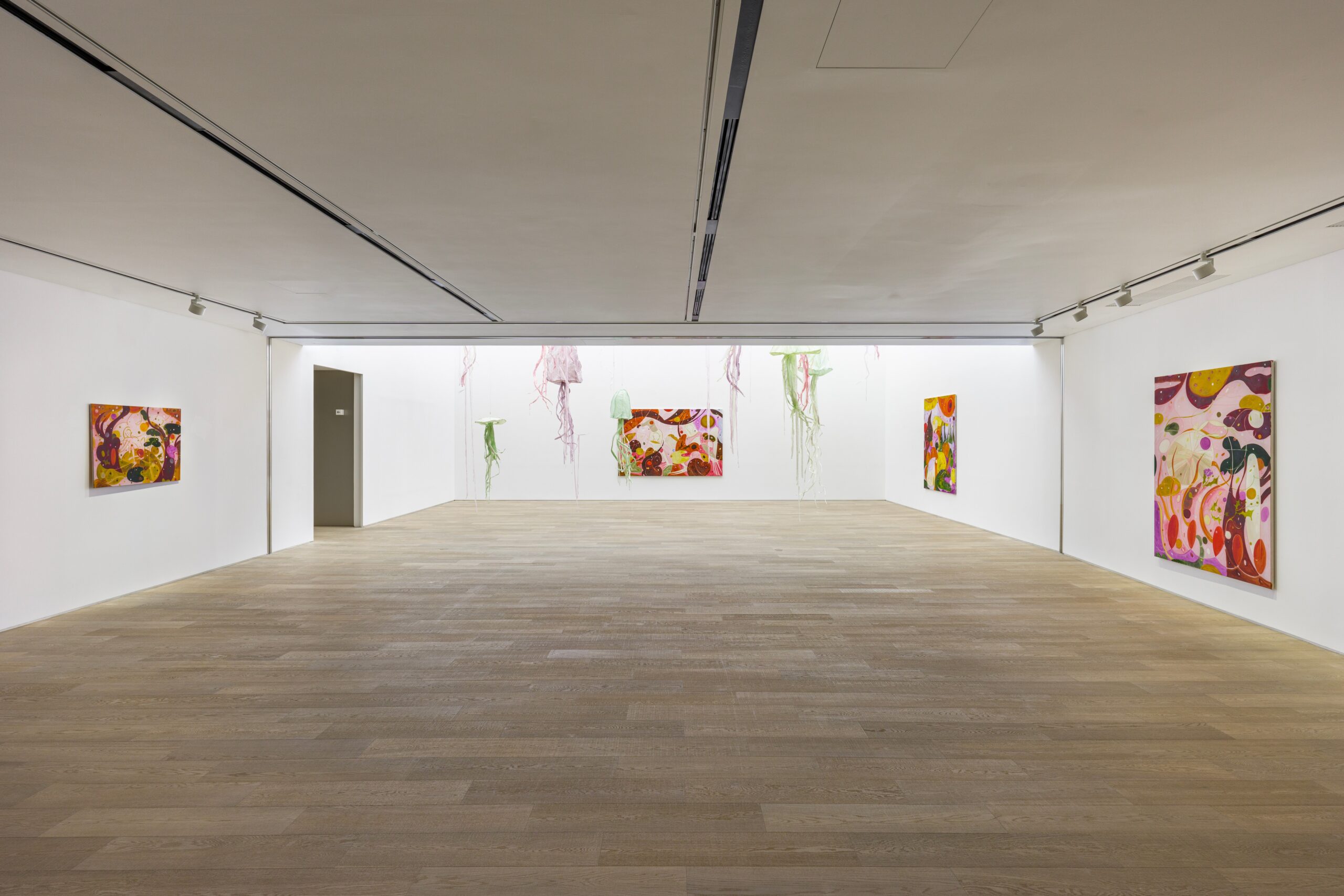
선명한 색채가 소용돌이치고 맴돈다. 자연물의 형상을 닮은 섬세하고 유기적인 형태들이 위로 떠오르며 나무, 꽃, 수련 연못, 팔레트, 나뭇가지를 암시하는 이미지와 뒤얽힌다. 이 기묘하고 아름다운 풍경—때로 수중 세계로, 때로 우주적 장면으로 변모하는 이 풍경—에는 언뜻 보아 아무도 살지 않는 듯하지만, 조금만 더 지켜보면 몇 번의 재빠른 붓질만으로 마법처럼 불러낸 창백한 얼굴들이 모습을 드러낸다. 이들은 마치 희미한 정령들처럼, 만화경 같은 세계 속 무성한 잎사귀와 다채로운 별자리 사이로 얼굴을 내밀며 조심스럽고 호기심 어린 눈빛으로 우리를 바라본다. 이곳은 중력에 매여 있지 않으며, 오직 굽이치는 풍경 위로 빛나는 맑고 푸른 하늘만이 어디가 위쪽인지 가늠하게 할 뿐이다. 그러나 혼돈도 이내 경쾌한 기쁨의 분위기에 감싸인다.
율리아 아이오실존은 이번 신작 유화와 세라믹 작업을 하는 내내 엽서 한 장을 곁에 두었다. 바로 스위스계 프랑스인 화가 펠릭스 발로통의 〈루아르강가의 모래〉(Sables au bord de la Loire, 1923)이다. 이는 단순하면서도 기묘하며 심리적 긴장감으로 가득한 풍경화로, 강변의 모래 언덕이 벌거벗은 여성의 살집 있는 다리와 엉덩이를 떠올리게 한다. 둥글고 부드러운 초록빛 나무들이 보이며 맑은 물 위로 아주 작은 푸른 배 한 척이 비친다. 풍경의 관능적인 아름다움 앞에서 한 남자의 왜소한 형상은 아무런 존재감이 없다. 겉보기에는 단순하고 직관적인 풍경화이지만 아이오실존은 그 모호한 상징성에 매료되었다. 그는 이러한 접근이 자신이 점점 더 이끌리는 창작 방식이라고 이야기한다.[1] 또한 발로통의 팔레트가 지닌 “신선함”, 최소한의 터치만으로 구현하는 꿈결 같은 분위기, 반복적으로 등장하는 그림자와 진홍색의 사용, 그리고 아이오실존 자신이 “질서 감각”이라고 표현하는 그의 특성에 깊은 매력을 느낀다.
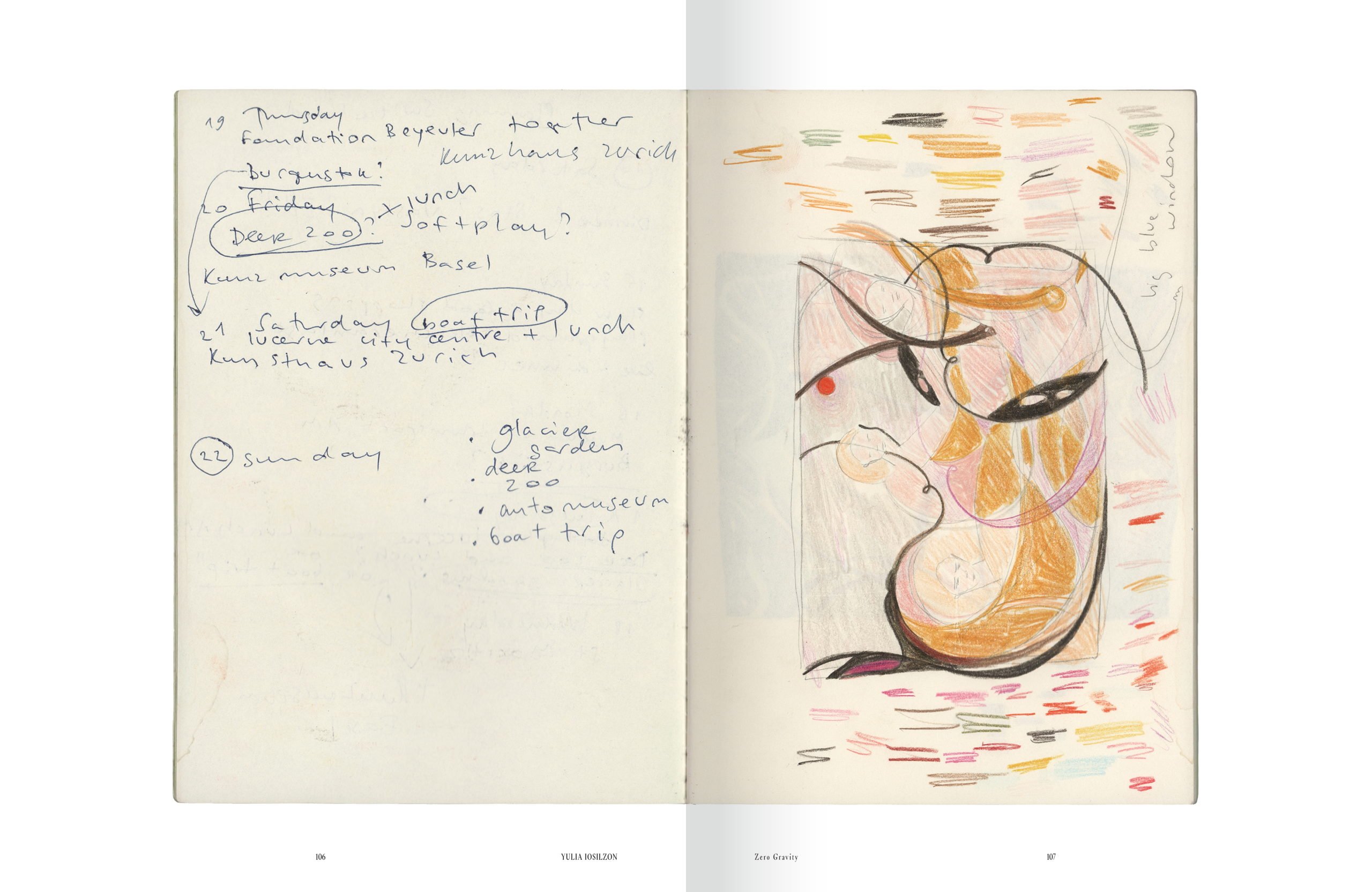
최근 몇 달간 아이오실존은 질서를 추구하려는 본능에 저항하며 무의식이 자유롭게 배회하도록 내버려두었다. 이전에는 회화 작업을 준비하며 먼저 스케치를 하곤 했지만, 이번에는 더 큰 즉흥성을 추구하며 자신이 “자유 의지”라 부르는 것을 채굴하기 위해 어떤 결과가 나올지 알지 못하는 채로 이미지를 만들어 내는 데 도전했다. 그는 신작 회화에 스케치의 생생한 에너지와 음악의 강렬함을 동시에 담아내고자 했다. 아이오실존은 이렇게 설명한다. “일단 회화의 리듬이 형성되고 나면 그 리듬이 계속해서 그림을 그려 나가도록 해줘요.”
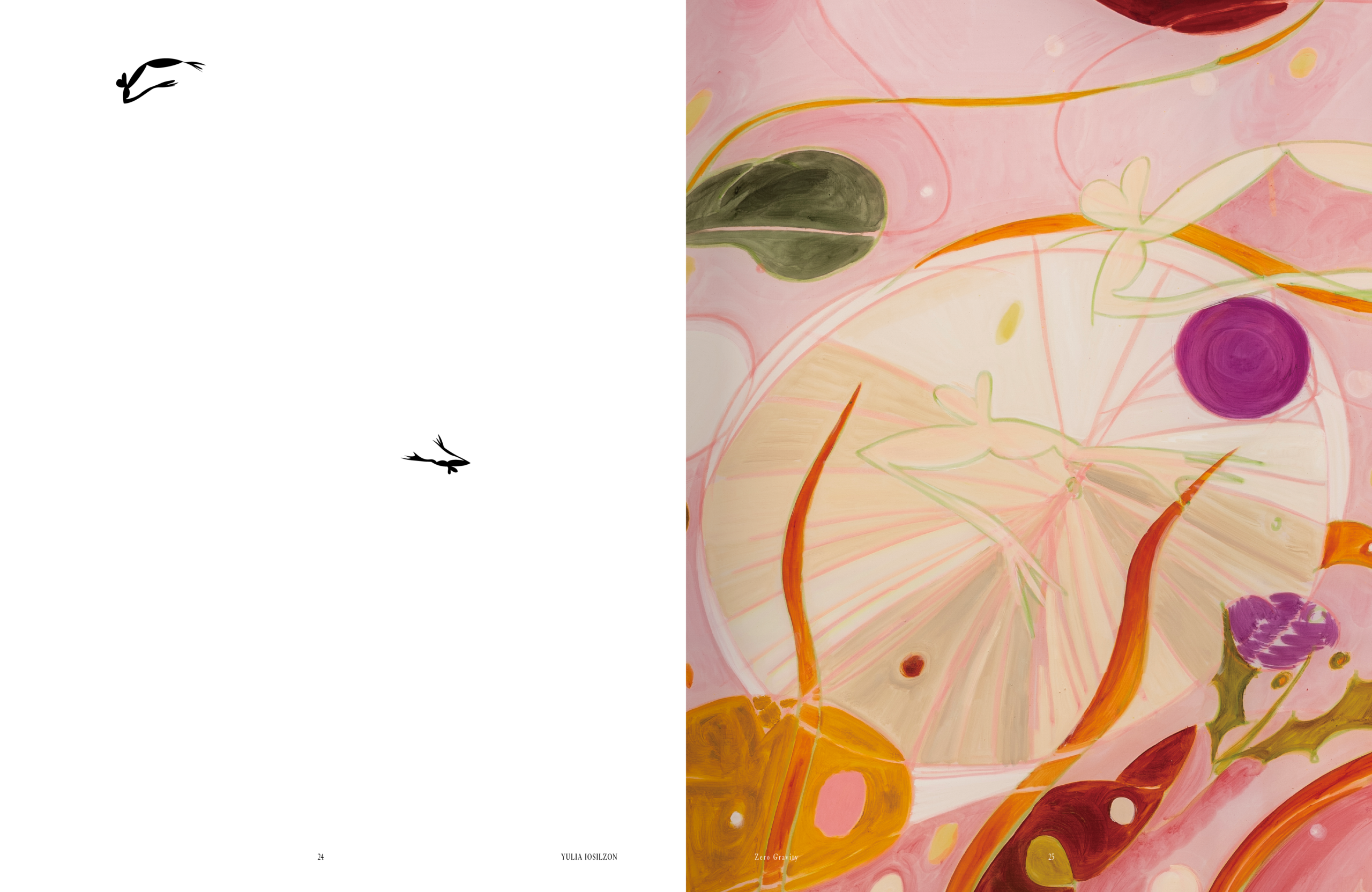
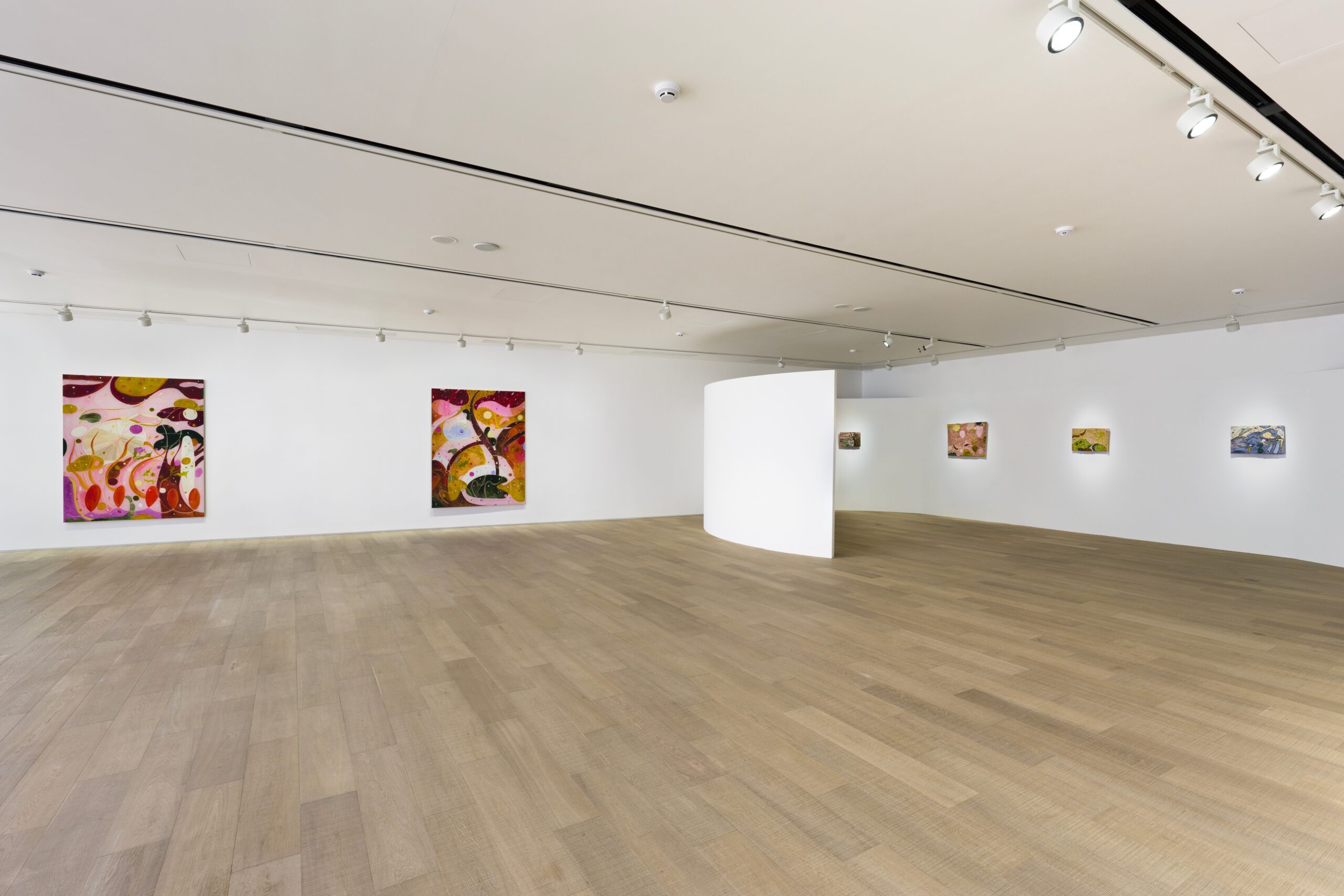
아이오실존의 회화 작품들을 함께 모아 놓고 보는 것은 하나의 서정적인 세계에 잠기는 경험이다. 탁한 분홍, 따뜻한 색감의 짙은 초록, 무수히 변주되는 화사한 노랑, 그을린 주황, 강렬한 빨강 등 생생한 색채의 유기적 형상들이 마치 샴페인에 취한 음표들처럼 춤추듯 화면을 가로지르며 맥동한다. 자신의 그림이 지닌 소리에 대한 아이오실존의 관심은 물론 오랜 미술사적 전통의 일부이다. 이 계보는 제임스 휘슬러의 〈Symphonies〉 연작, 바실리 칸딘스키의 〈Improvisations〉, 파울 클레의 ‘다성 음악’(polyphony) 속성을 아우르며, 이후 윌럼 드 쿠닝과 같은 추상 표현주의 화가는 음악가가 음을 유연하게 늘리고 변형하듯 자신 역시 호흡에 맞춰 색을 즉흥적으로 다룬다고 말하기도 했다. 조앤 미첼 역시 회화의 청각적 측면에 사로잡혀 있었다. 미첼은 그림을 그리는 동안 클래식 음악과 재즈를 들으며 그 선율과 리듬을 화면 위에서 유영하듯 춤추는 아름다운 제스처의 흔적으로 변모시켰다.
아이오실존이 영향을 받은 대상은 다방면에 걸쳐 있다. 그는 앞서 등장한 여러 작가 외에 아서 래컴의 삽화가 실린 어린이책에도 매료되었다. 아이오실존이 보편적인 이야기와 그것이 그리스 신화와 연결되는 지점에 관심을 두고 있기 때문이다. 또한 극도로 절제된 제스처만으로 강렬하고 때로 섬뜩한 감정을 불러일으키는 스위스 화가 미리암 칸의 뛰어난 표현력에 관해서도 언급한다. 그뿐 아니라 도예가 베티 우드먼, 조각가 에바 헤세와 에르빈 부름 또한 영감의 원천으로 꼽으며 무엇보다 그들의 유희적인 감각을 사랑한다고 말한다. 최근 몇 년 사이 작가는 스웨덴의 신비주의 화가 힐마 아프 클린트의 회화에도 마음을 빼앗겼다. 식물 형상이 지닌 상징적인 힘을 오래 파고들었던 아프 클린트는, 아이오실존의 표현에 따르면 “머릿속 아주 편안한 방”에 자리 잡고 있다. 아이오실존은 아프 클린트를 “상징주의의 여왕이자 색채의 여왕”이라 칭하며 “오랜 친구를 찾듯” 그의 회화와 드로잉으로 거듭 돌아가게 된다고 말한다. 그는 특히 아프 클린트 작품의 순환하고 맥동하는 구성, 때로 캘리그래피적 특성을 보이는 선, 그리고 독창적인 색채 사용법에 매혹되었다. 그중에서도 분홍과 보라는 상징적인 의미를 띠는데, “분홍은 영적인 사랑을, 보라(혹은 자주)는 지혜와 평화, 그리고 삶의 마지막 단계와 연관된 부드러운 에너지를 뜻한다”.[2]
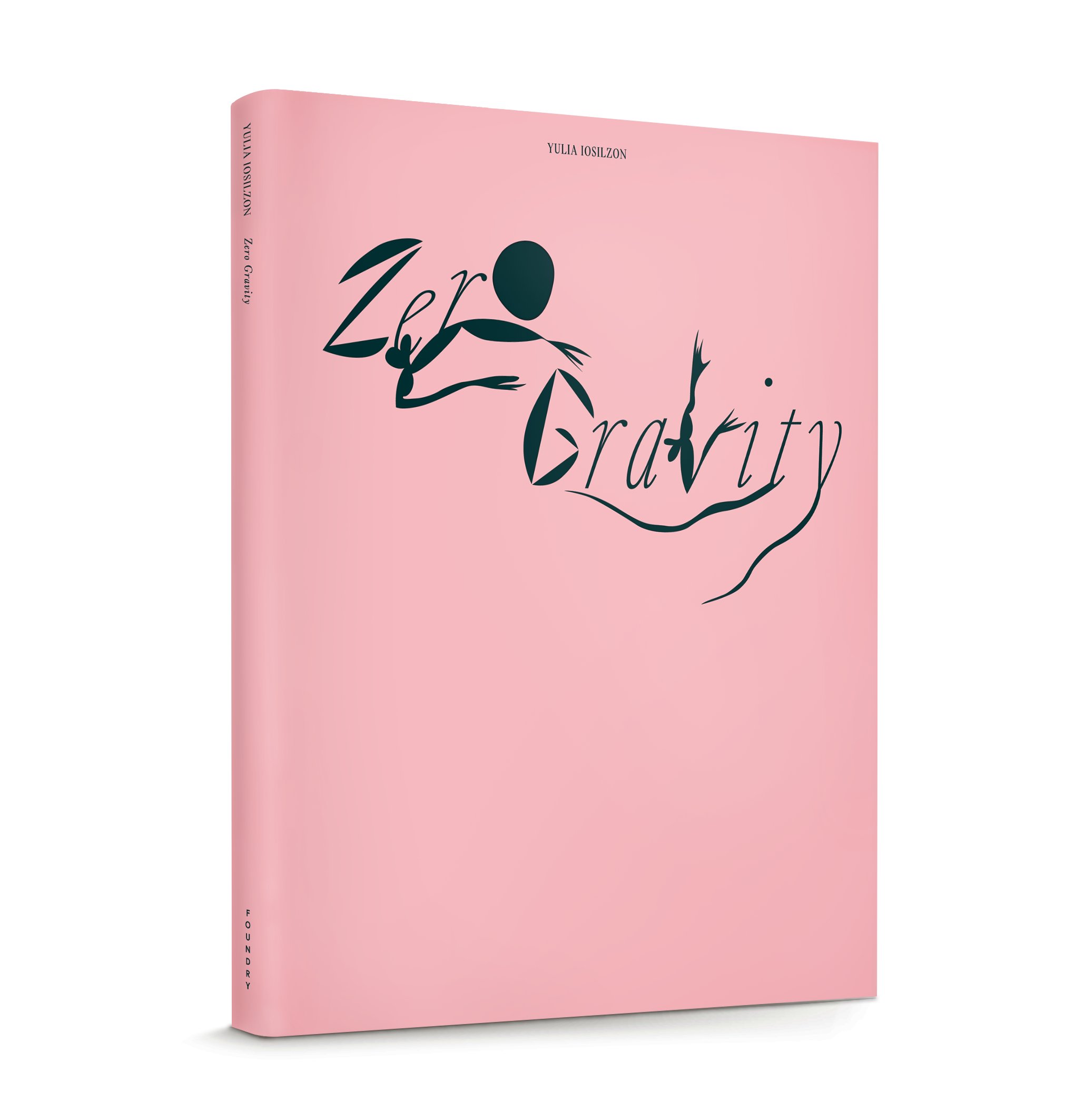
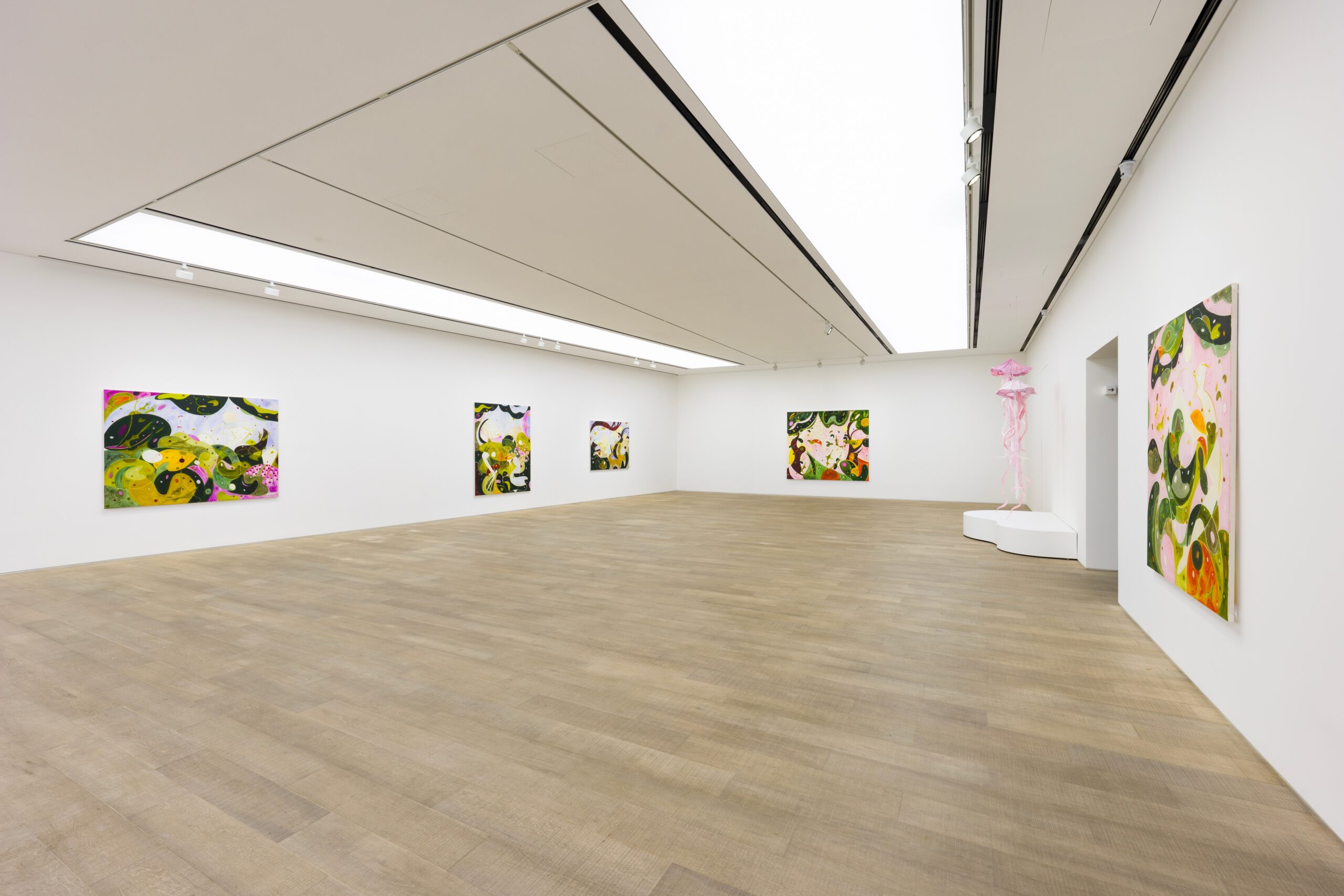
아이오실존이 ‘무중력’(Zero Gravity)라는 제목 아래 선보이는 이번 신작들에서는 색채와 선의 향연이 펼쳐지는 가운데 그간의 다양한 탐구가 한데 모여든다. 그 사이사이 유령처럼 희미한 목격자들이 반복해 등장하면서 화면을 순수 추상에서 몽환적인 구상의 영역으로 끌어온다. 아이오실존에게 그 존재들이 누구인지, 혹은 무엇인지 물었다. “대부분 여성 인물이에요. 그들이 무엇을 나타내는지는 작품에 따라 다르죠. 어떤 작업에서는 환각적인 세계를 붙잡아 주는 닻의 역할을 하기도 해요.” 〈The Bathers〉(이하 모든 작품은 2026년 작)에서는 민머리를 한 작은 얼굴 둘이 가느다란 분홍빛 선들의 소용돌이 속에서 관람자를 응시한다. 이 선들은 따뜻한 색조의 모자이크 같은 화면 위에서 구르고 얽히며 팔레트와 식물, 밤바다와 심해를 하나의 풍경으로 엮어 낸다. 〈The Story of Medusas and Their Companion〉에서는 해저 왕국처럼 보이는 공간에 작고 하얀, 네발 달린 존재가 살고 있는데 그 얼굴은 〈The Bathers〉 속 두 인물을 떠올리게 한다. 신작 가운데 일부는 리넨에 유채로 제작되었지만 〈Training Curiosity〉를 비롯한 다수의 작품은 보다 반투명한 직물 위에 그려졌다. 이 재질은 이미지에 더욱 초현실적인 분위기를 부여한다. 그림 속 밝은 노란빛 영역에서 강렬한 분홍빛의 강낭콩 같은 형상 하나가 유영하고, 그 위로 회전하는 주황빛 행성처럼 보이는 것들이 떠다닌다. 화면 왼편 위쪽에서는 눈이 커다란 존재가 소용돌이처럼 말린 달빛에 올라타 어디론가 가는 중이다.
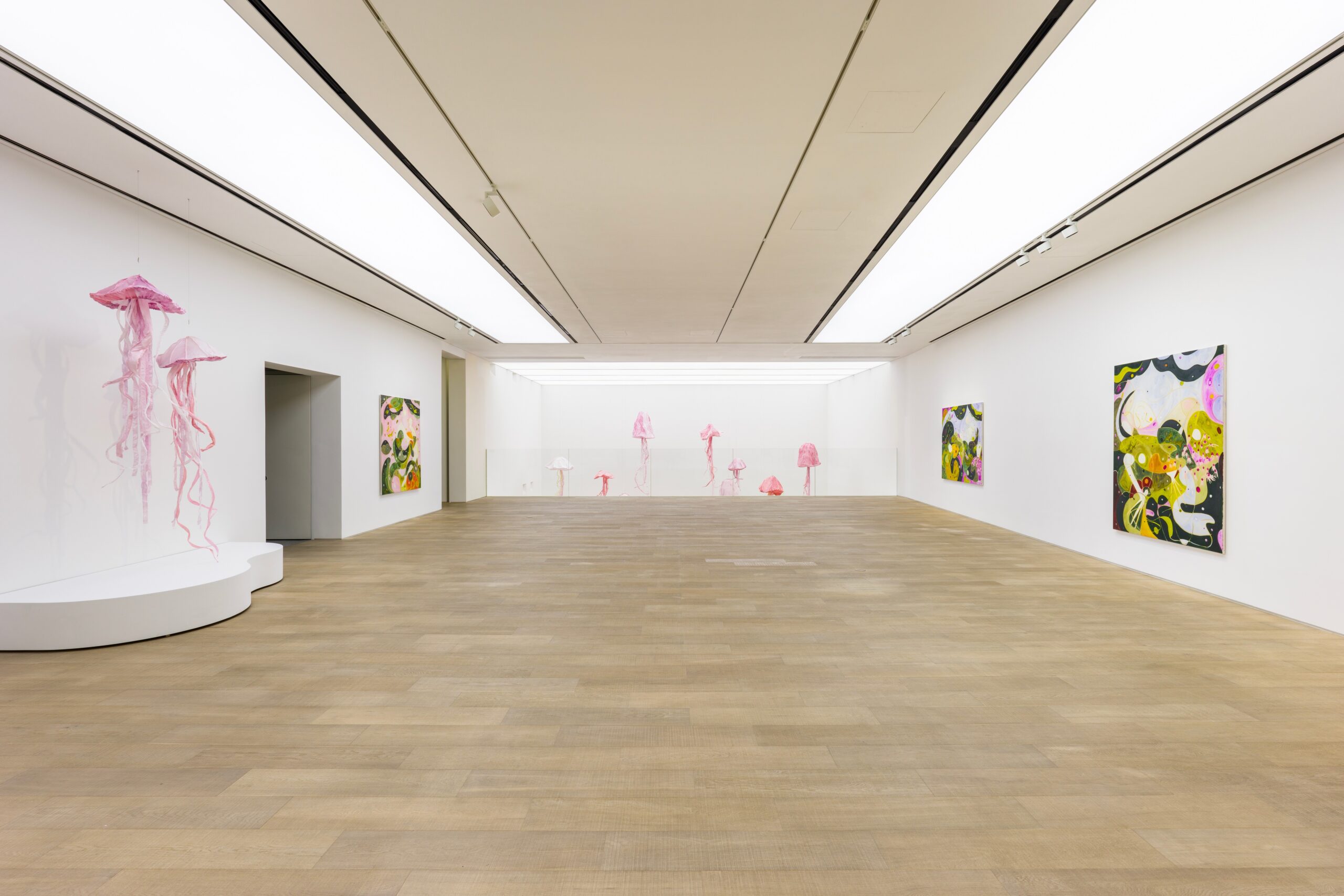
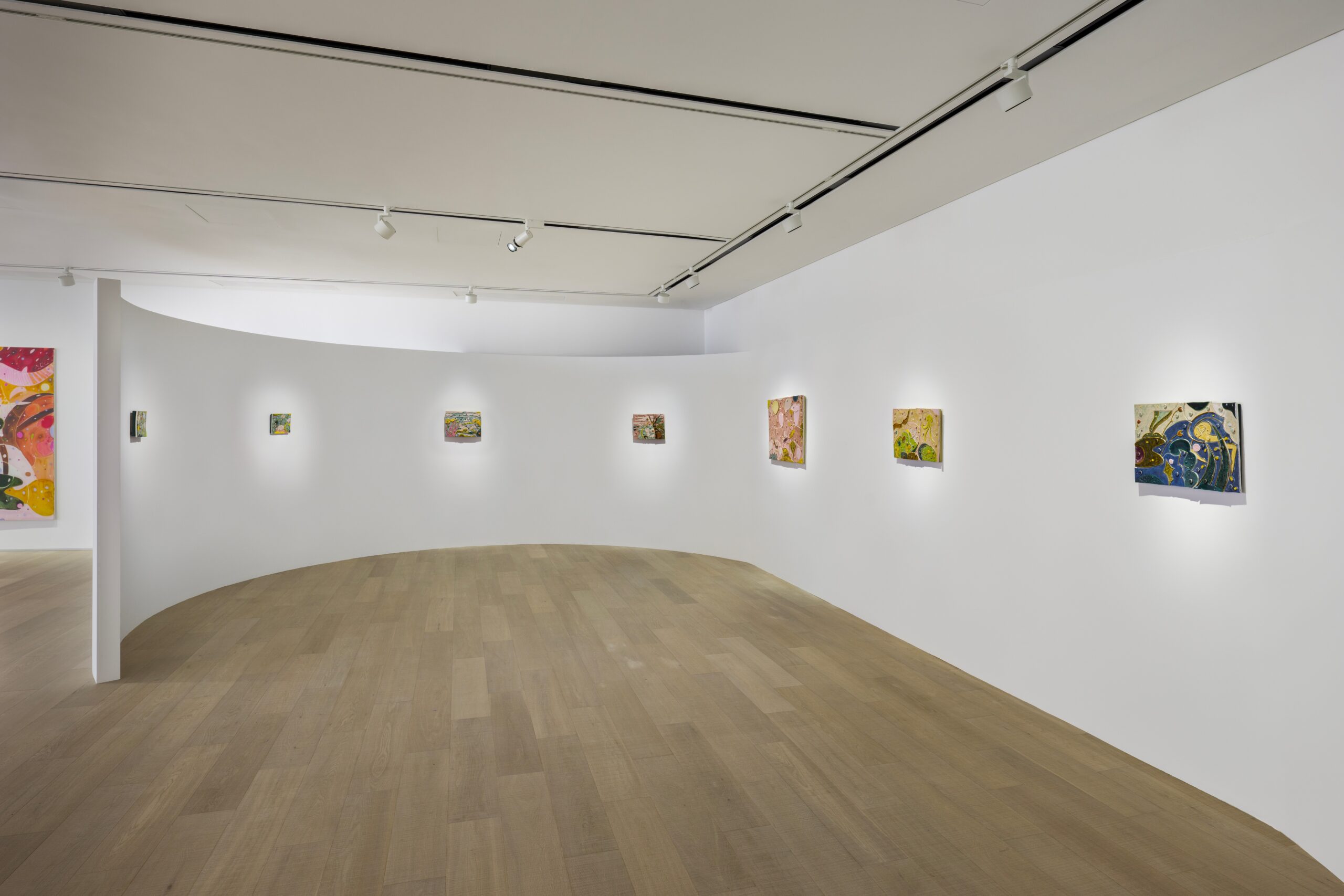
아이오실존의 회화 작품이 덧없음(ephemerality)을 향한다면 세라믹 작업은 상상 속 생태계를 지상으로 불러온다. 저마다 형태를 갖춘 조각들은, 농후하고 깊은 색조에 때로 얼룩덜룩하기도 한 유약을 덧바른 채 우주적 퍼즐처럼 맞물려 하나의 장면을 이룬다. 〈Close to the Shore Vol. II〉에서는 한 인물이 해파리가 서식하는 수중 세계를 가만히 들여다보는데, 이때 해파리의 촉수는 발레리나의 손끝처럼 우아하게 말려 올라가 있다. 회화 속 세상은 이제 오브제로 번역되어 구현된다. 공중을 부유하던 모티프들은 보석 같은 파편이 되어 지상에 안착한다. 아이오실존은 물감의 예측 불가능성, 즉 도전 정신과 영감을 동시에 불러일으키는 바로 그 속성과 세라믹 유약의 변덕스러움 사이에서 유사점을 끌어낸다. 그는 세라믹 작품을 이루게 될 조각들을 구워 낸 뒤 가마에서 꺼내는 순간을 이렇게 표현한다. “놀라움이 주는 기쁨 그 자체예요. (······) 놀라움이 가득 담긴 양동이를 여는 것 같죠!”
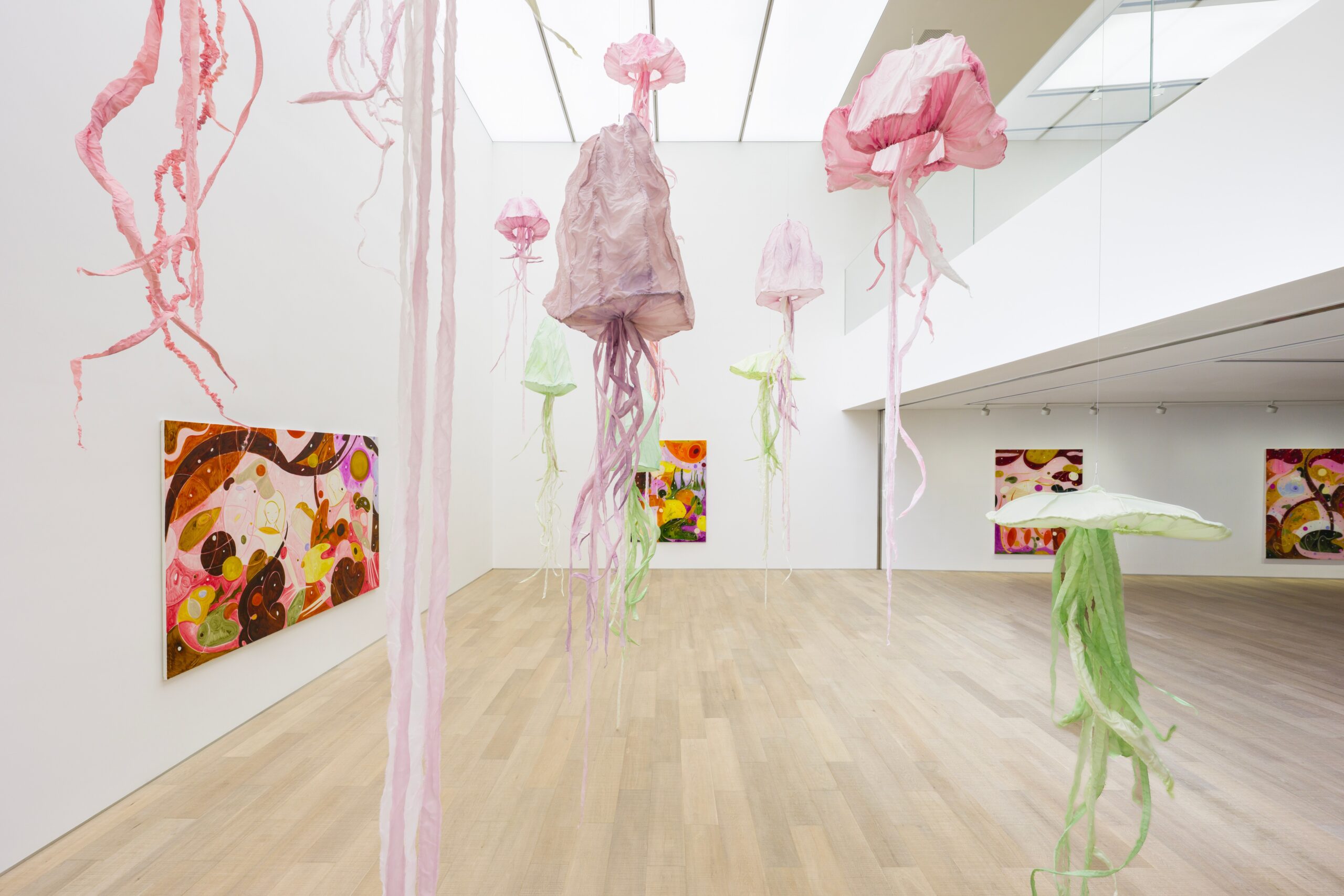
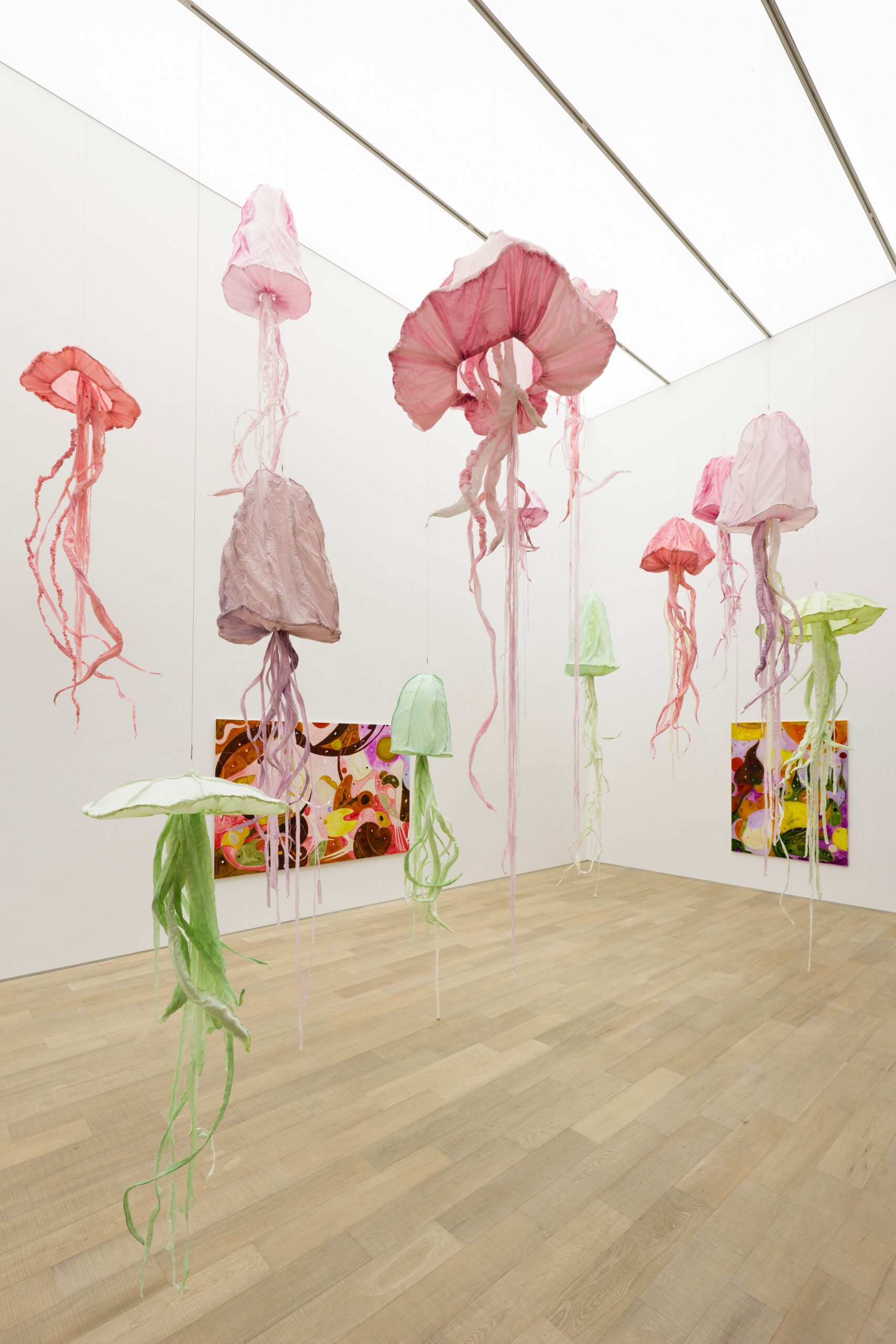
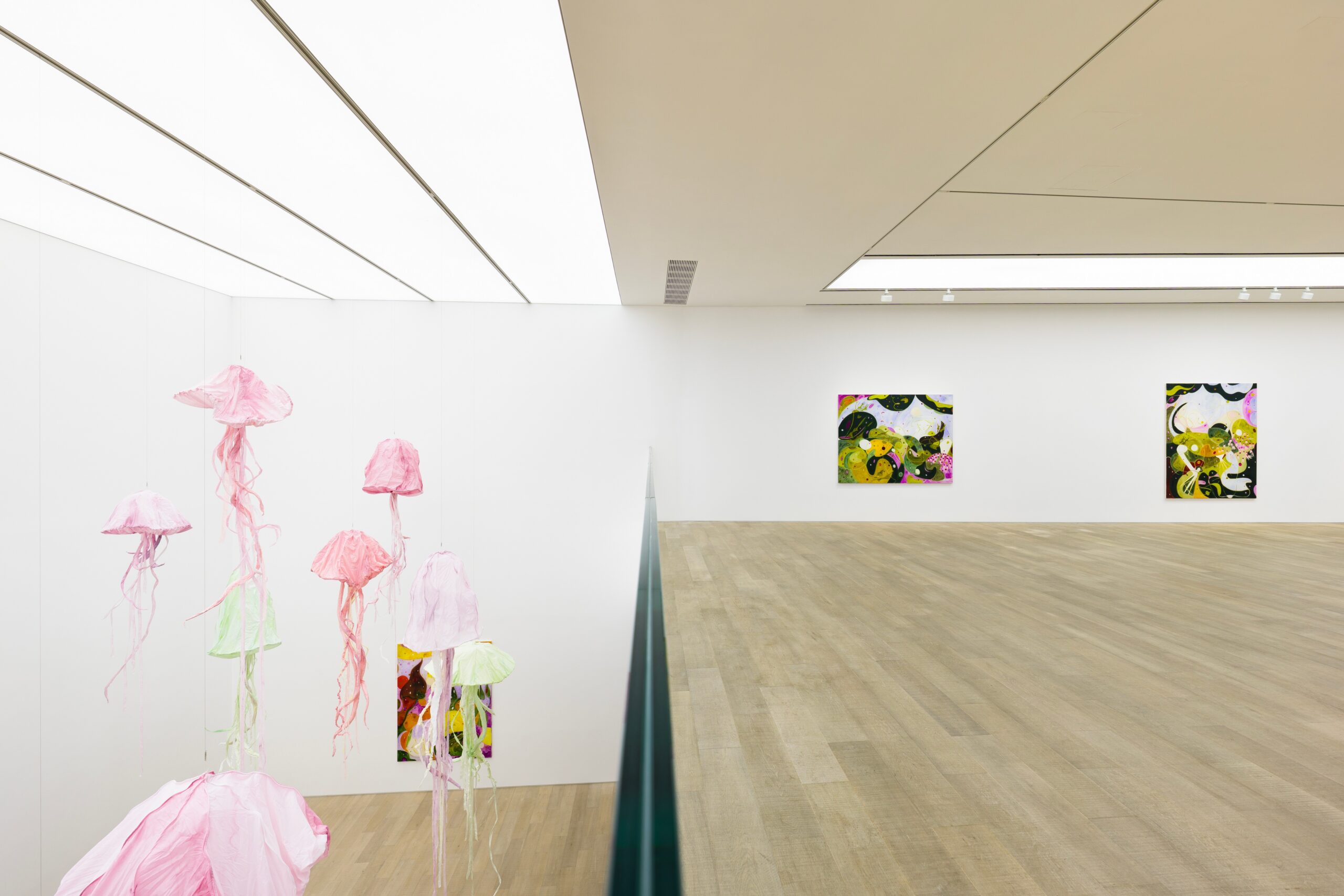
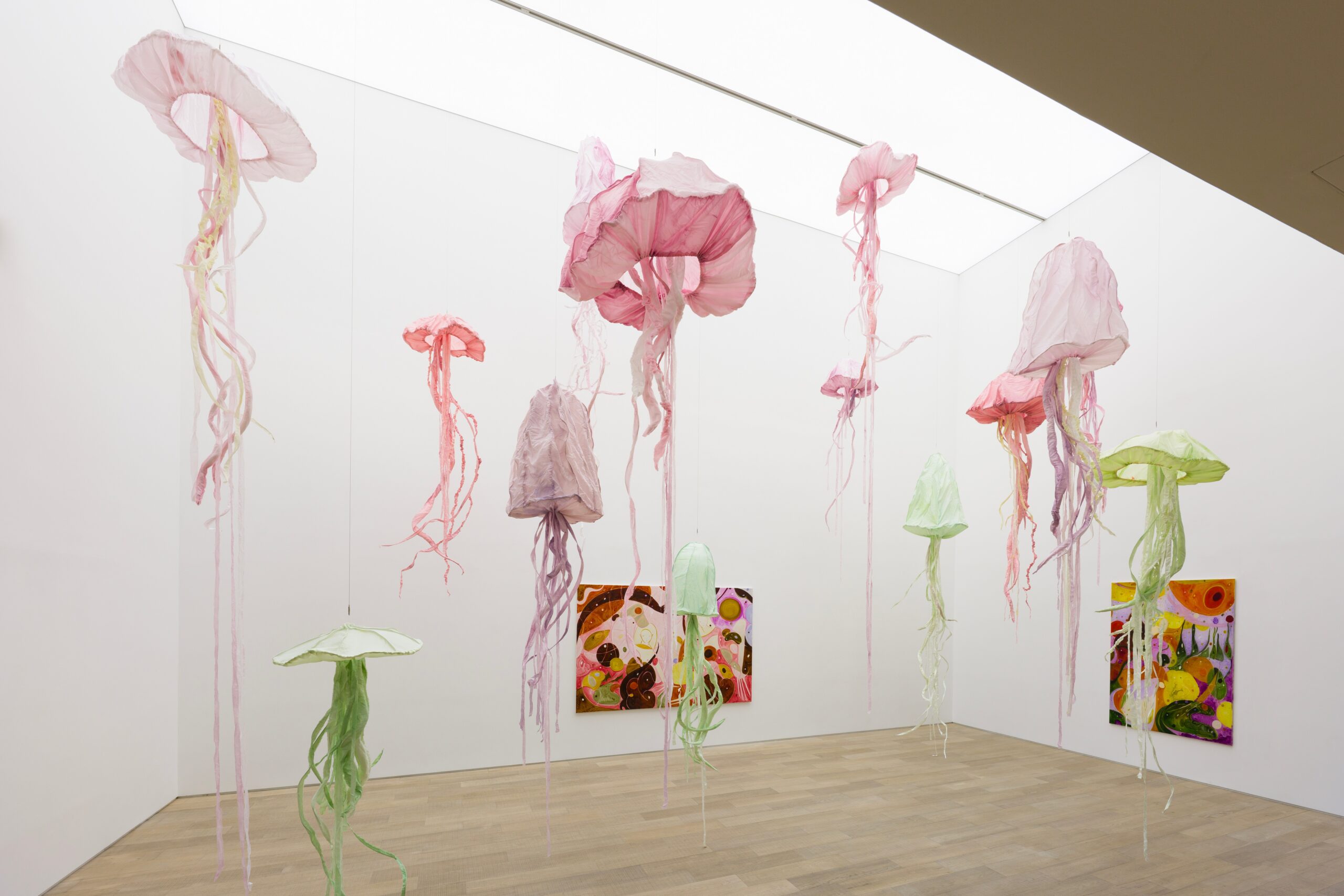
아이오실존의 작품 속 소용돌이치는 듯한 감각은 원심력을 연상시키며 대지와 바다, 하늘을 잇는 순환의 질서를 환기한다. 그는 회화 및 세라믹 작업과 더불어 다양한 생명체를 형상화한 조각을 꾸준히 선보여 왔다. 몇 해 전 아들을 출산한 이후로는 달팽이에 빠져들었다. 달팽이의 보호막이자 집인 나선형 껍데기가 오래전부터 여러 문화권에서 모성뿐 아니라 다산, 새로운 생명, 탄생과 재탄생의 순환을 상징했다는 사실을 발견했기 때문이다. 한편 이번 전시를 위해 작가는 갤러리 천장에 매달릴 노란빛과 분홍빛의 거대한 해파리 연작을 제작했다. 아이오실존은 버섯과 무화과, 비단 낙하산과 타지마할을 연상시키는 그 형상들의 모호함을, 또한 그들이 소위 현실과 꿈의 세계 사이에서 중력에 구애받지 않고 부유하는 방식을 좋아한다. 그뿐 아니라 그는 해파리와 그리스 신화의 연관성에도 이끌린다. 해파리의 성체는 ‘메두사’(medusa)라고 불리는데, 몸체의 형태와 기다란 촉수가 그리스 신화에서 꿈틀거리는 뱀들로 뒤덮인 머리를 지녔다고 묘사되는 동명의 괴물을 연상케 하기 때문이다.
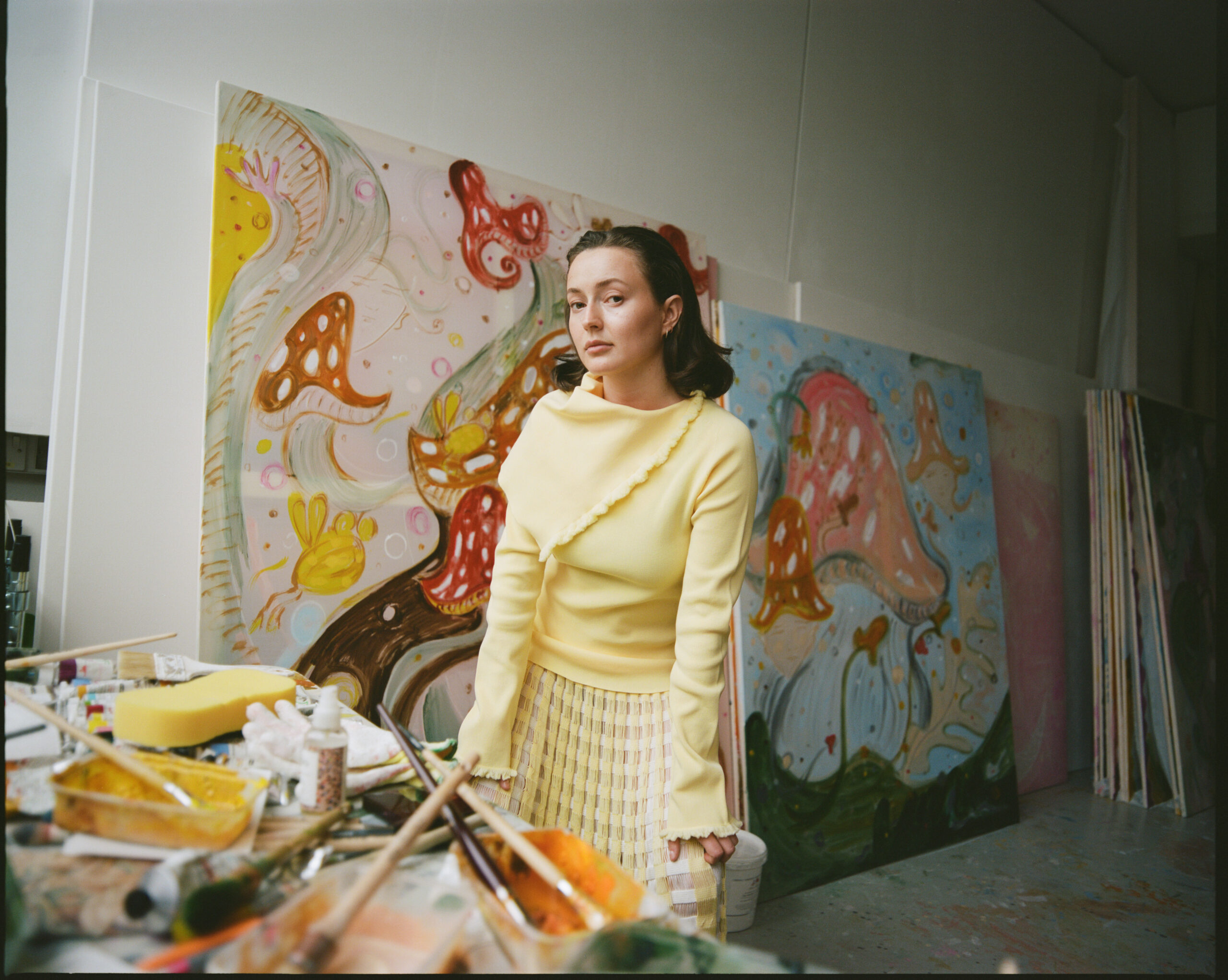
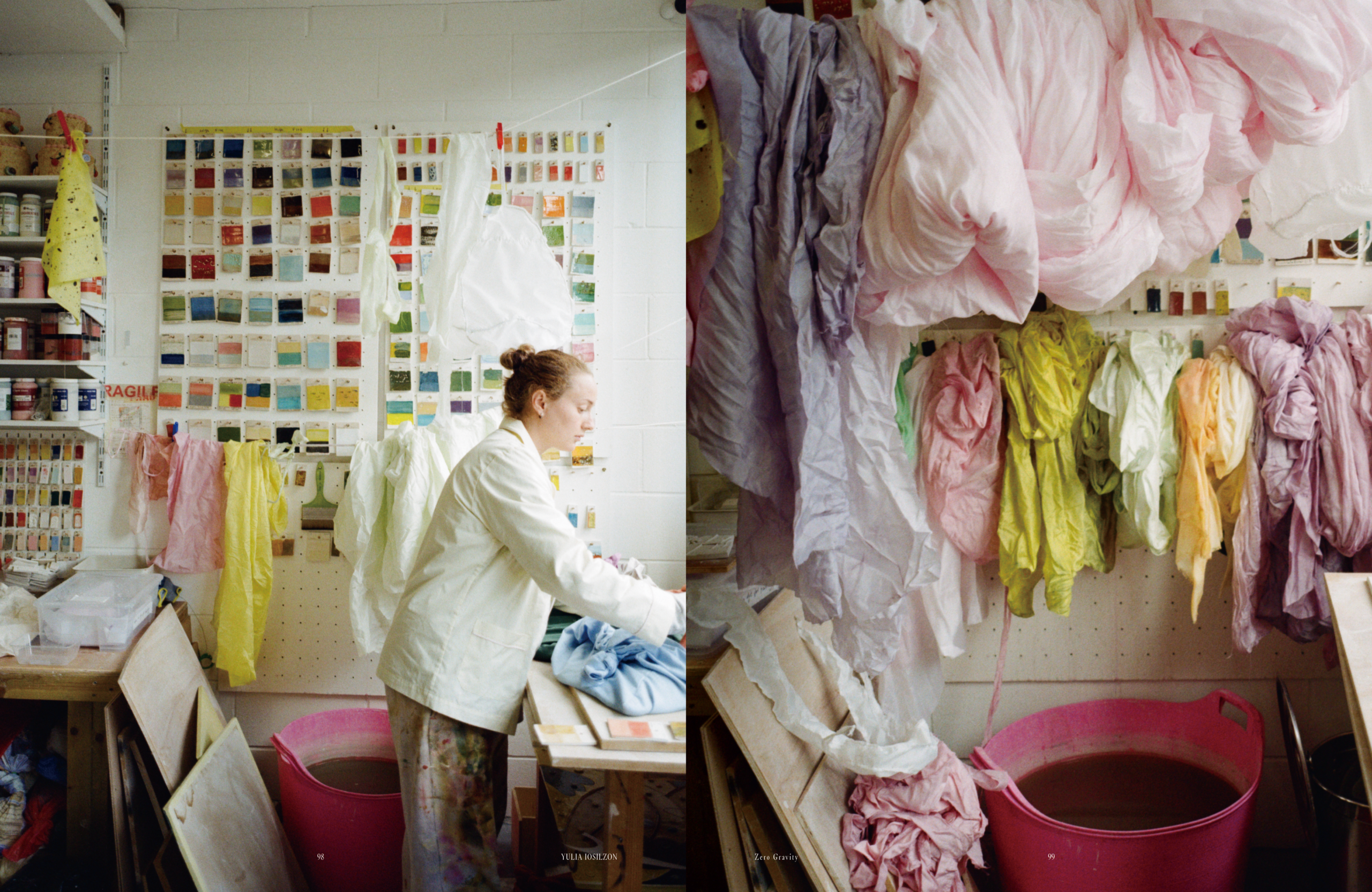
색채는 아이오실존에게 매우 중요한 요소다. 작가는 항상 유화 물감을 사용하는데, 아크릴 물감보다 안료의 깊이와 강도가 훨씬 풍부하다고 믿어서다. 또한 “모든 튜브가 하나하나 다르다”는 점을 사랑한다. 그는 자신이 아끼는 물감의 이름을, 마치 시인이 사랑하는 시어를 오래도록 음미하듯 읊는다. 알리자린 클라레(Alizarin Claret), 크라플라크 로즈 앤티크 엑스트라(Kraplak Rose Antique Extra), 코발트 바이올렛(Cobalt Violet).
회화에 관해 말할 때 아이오실존은 정원 가꾸기에 빗댄 설명을 즐겨 사용한다. 이번 신작과 관련해서는 자신의 초기 회화 및 세라믹 작업이 씨앗을 흩뿌려 그로부터 새로운 것이 피어났다고 이야기한다. 아이오실존의 사유에서 중심에 놓인 모티프가 나무, 그중에서도 참나무라는 사실은 자연스럽다. 작가는 참나무가 마법적인 존재로 그려지면서도 어디에나 흔히 존재한다는 사실에 매료되었다. 다수의 문화권에서 참나무는 삶의 순환을 상징하며 수많은 생명체의 보금자리가 되어 준다. 여러 면에서 그는 자연의 창조 방식을 모방하고자 하고, 무엇보다 자신의 이미지들이 유기적으로 자라나기를 바란다. 아이오실존은 “아름다움이 그저 자연스럽게 발생할 때” 행복을 느낀다고 말한다. 이어 덧붙인다. “아름다움은 곧 놀라움이고 계획되어서는 안 돼요. 그건 기쁨을 불러일으켜야 하죠.”
[1] 모든 인용문은 2026년 6월 26일, 필자가 아이오실존의 런던 작업실을 방문해 진행한 인터뷰에서 발췌했다.
[2] Leda Scully, “Understanding Hilma. A life dedicated to spirituality in art,” Irish Museum of Modern Art, 24 August 2017, https://imma.ie/magazine/understanding-hilma-a-life-dedicated-to-spirituality-in-art.
Vivid colours swirl and eddy; delicate, biomorphic shapes float upwards, entangling with suggestions of trees and flowers, lily ponds, palettes, and branches. Although at first glance these strange and lovely landscapes—which, at times, morph into something aquatic and even galactic—appear to be uninhabited, stay with them, and pale faces appear, conjured in a few swift lines. Like faint spirits, these creatures peer out from the lush foliage and rich constellations of this kaleidoscopic realm with a look of delicate enquiry. Gravity, here, is untethered; only the limpid blue sky, radiant above the sinuous landscape, indicates which way is up. Chaos, however, is subsumed into a mood of light-hearted joy.
When Yulia Iosilzon was creating her new oil paintings and ceramics, she kept a postcard close by. It was Sables au bord de la Loire (Sands of the Loire, 1923) by the Swiss-French artist Félix Vallotton. It’s a simple, strange, psychologically charged landscape in which sand dunes on the banks of a river evoke the fleshy legs and buttocks of a naked woman. The green trees are bulbous and soft; a diminutive blue boat is reflected in the limpid water. The slight figure of a man is inconsequential against the voluptuous beauty of the landscape. Although it’s a seemingly straightforward picture, Iosilzon was captivated by its ambiguous symbolism. It’s an approach to artmaking that, she says, she’s gravitating towards more and more.[1] She is also drawn to the “freshness” of Vallotton’s palette, the dreamlike atmosphere he conjures with the lightest of touches; his recurring fascination with shadows, use of crimson red, and what Iosilzon describes as his “sense of order.”
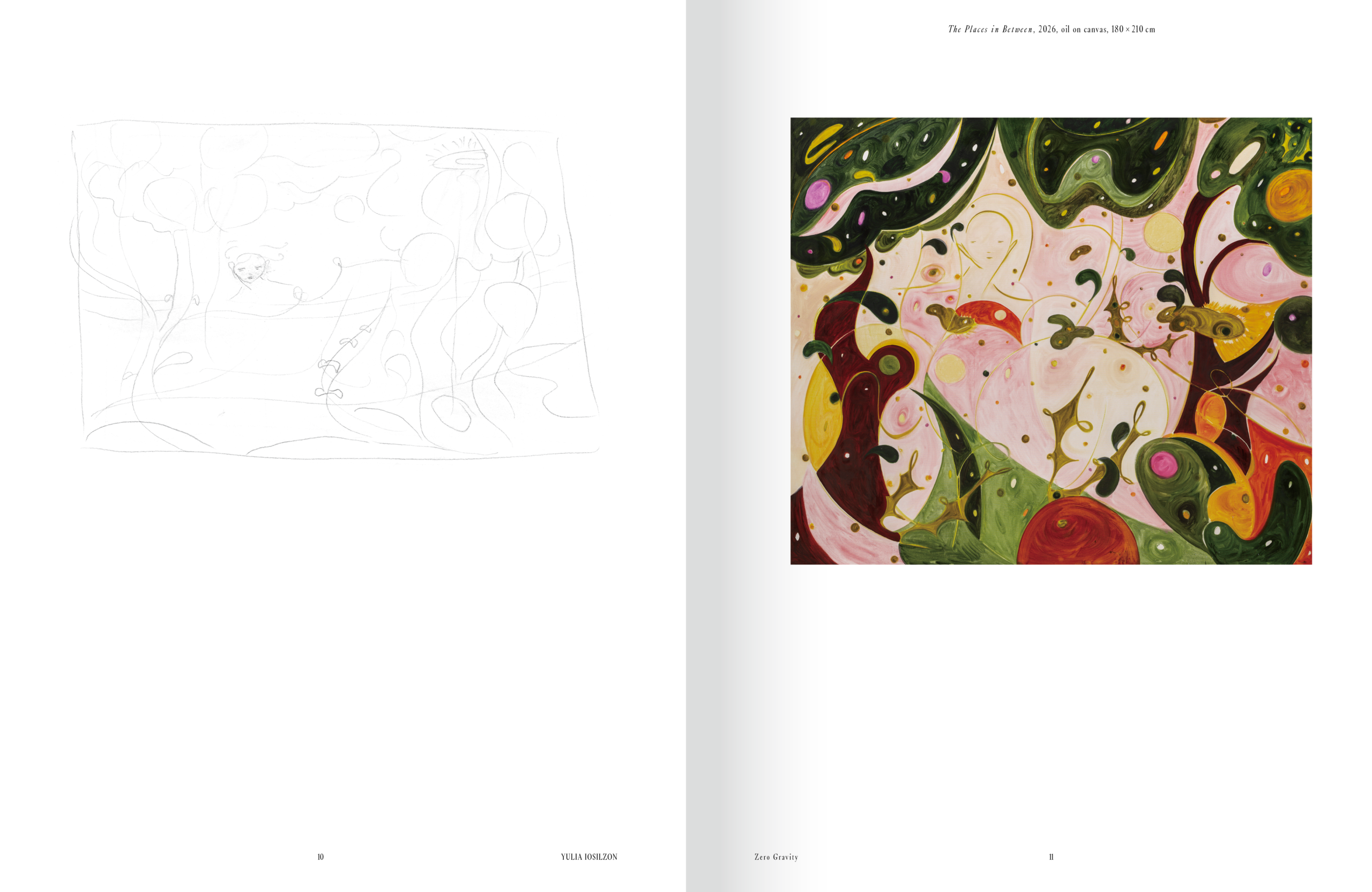
In recent months, the artist has been pushing back against her natural instinct for order, allowing her unconscious to roam where it will. Previously, she made sketches to prepare for a painting, but for this new body of work, aiming for greater spontaneity and mining what she calls her “free will,” she challenged herself to conjure images without necessarily knowing what the outcome might be. She wanted her new paintings to embody both the energy of a sketch and the intensity of music. Iosilzon explains: “Once the rhythm of a painting is established, it allows you to keep painting.”
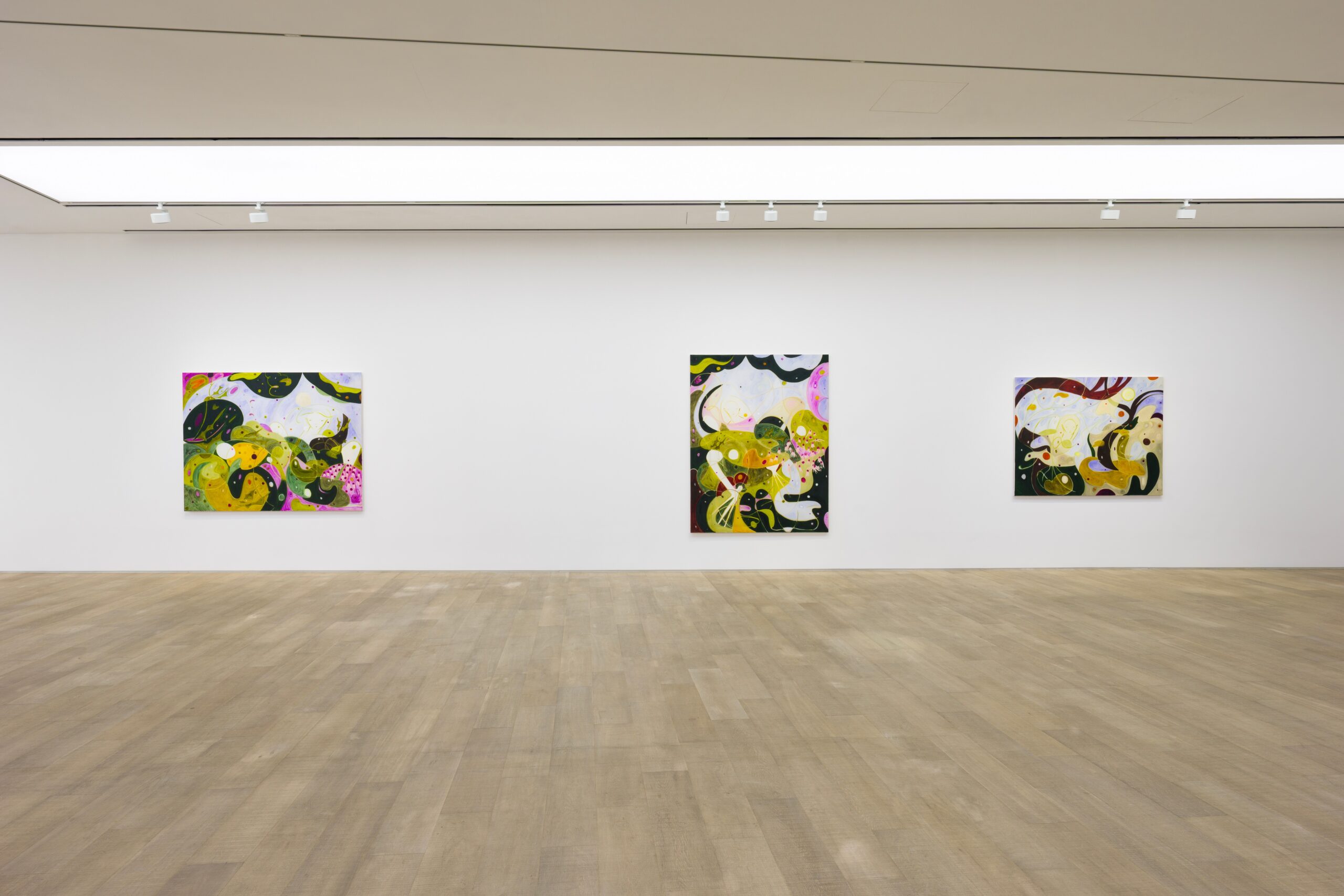
To see a group of Iosilzon’s paintings together is to be immersed in something lyrical: biomorphic shapes in vivid colours—dusty pinks, warm sap greens, myriad variations on sunny yellows, burnt oranges, and hot reds—pulsate across the surface, like notes of music, drunk on champagne. The artist’s fascination with the sound of her pictures is, of course, part of a long artistic tradition, from James Whistler’s “Symphonies,” to Wassily Kandinsky’s “Improvisations” and Paul Klee’s “polyphony”; later, abstract expressionists such as Willem de Kooning claimed he “bent” paint in the same way a musician bends the notes in a song. Joan Mitchell was also obsessed with the sonic aspect of painting: she listened to classical music and jazz while she painted, transforming melodies and rhythms into an array of gorgeous, gestural marks that dance their way across the surface.
Iosilzon’s influences are eclectic. Along with the many artists already discussed, she mentions Arthur Rackham’s illustrated children’s books—she’s fascinated by universal stories and their connection to Greek myth—and the Swiss painter Miriam Cahn’s great ability to evoke strong, often frightening, emotions with the most economical of gestures. She also cites the ceramic artist Betty Woodman, along with the sculptors Eva Hesse and Erwin Wurm, as inspirations: she loves, in particular, their playfulness. In recent years, Iosilzon has also been drawn to the paintings of the Swedish mystic Hilma af Klint, who long mined the symbolic power of vegetal forms and whose works, says Iosilzon, inhabit a “very comforting room in my head.” She describes af Klint as “the queen of symbolism and the queen of pigments” and returns to her paintings and drawings “like an old friend.” She’s been particularly fascinated by the cyclical and pulsating nature of af Klint’s compositions, the often calligraphic quality of her lines, and idiosyncratic use of colour—in particular purples and pinks, both of which carried symbolic meaning: “pink represented spiritual love and purple (or violet) represented the wisdom, peace, and softer energy associated with the final stages of life.”[2]
In Iosilzon’s recent work, which she’s exhibiting under the collective title Zero Gravity, her assorted explorations have come together in a riot of colour and line punctuated by the recurring motif of the wraithlike witnesses, which pull the compositions back from pure abstraction into a trippy kind of figuration. I ask Iosilzon who, or what, these creatures are. She replies: “They’re usually female characters. And what they represent depends on the painting. In some works they act like anchors in a hallucinogenic world.” In The Bathers (all works 2026), two slight, bald heads gaze out from a maelstrom of thin pink lines, which tumble and weave their way across the warm-toned, mosaic-like painting, pulling together palettes and plants, the night sea and the deep sea. In The Story of Medusas and Their Companion, what might be an underwater kingdom is inhabited by a tiny, white, four-legged creature whose face echoes the two in The Bathers. While some of these new works are oil on linen, others, such as Training Curiosity, are painted on a more translucent fabric. It lends the image an otherworldly atmosphere: what might be spinning orange planets hover over a bright yellow ground, above which drifts a hot pink, bean-like shape. In the upper left-hand corner, a wide-eyed creature hitches a ride on a contorted moonbeam.
If the paintings lean towards ephemerality, Iosilzon’s ceramic works, by contrast, bring the imagined ecology down to earth: shaped pieces, their glazes rich, deep, and often mottled, come together like a cosmic jigsaw. In the underwater scene Close to the Shore Vol. II, for example, a lone character peers into a fishy universe populated by medusas, whose tentacles curl upwards, like a ballerina’s hands. The painted realm is translated into an object: buoyant motifs become earthbound as jewel-like fragments. Iosilzon draws an analogy between the unpredictability of paint—a quality that both challenges and inspires her—and the volatility of ceramic glazes. She describes opening her kiln after firing the shapes that will constitute a ceramic work as “a pure joy of surprises … a full bucket of surprises!”
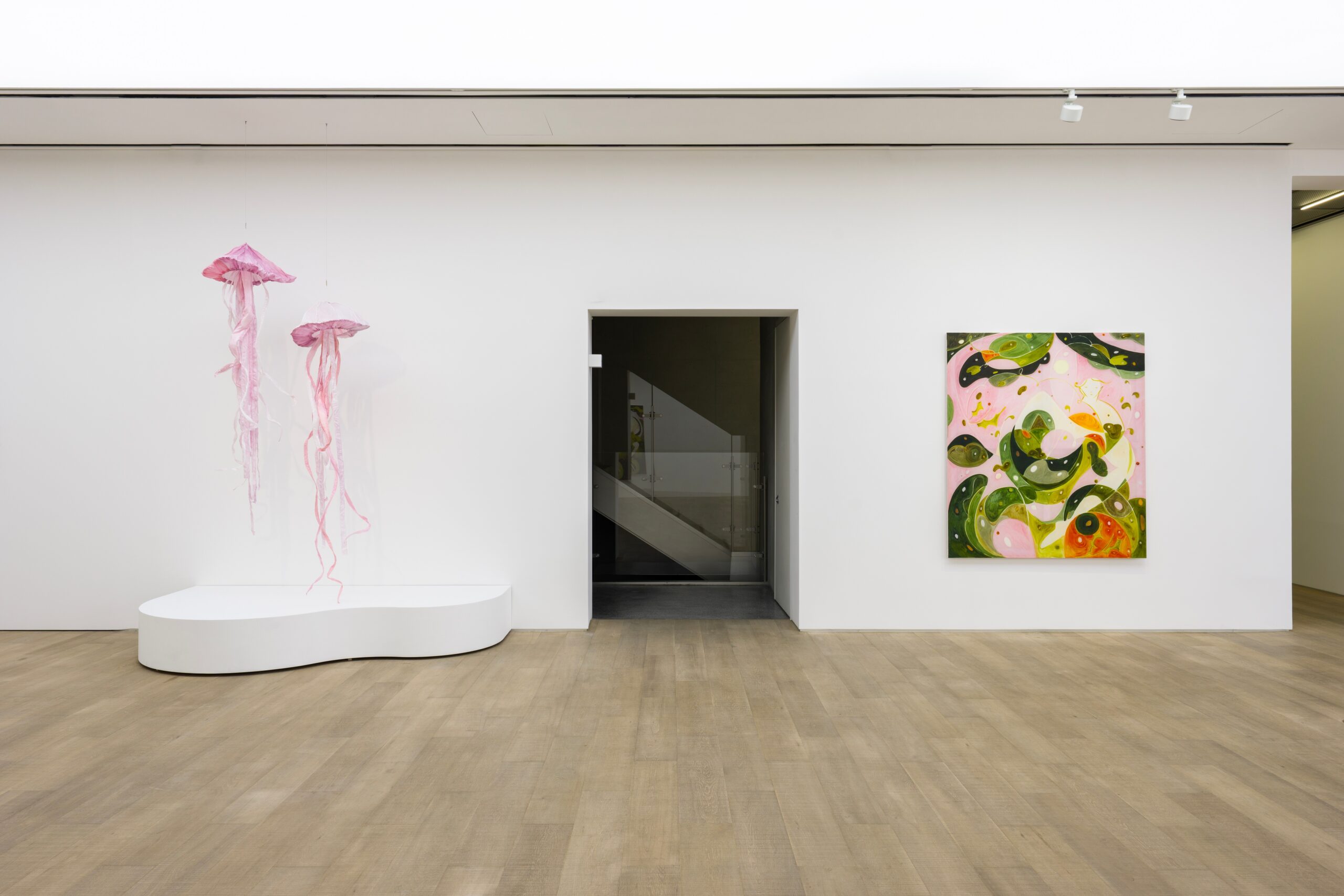
The swirling sense of a centrifugal force in Iosilzon’s work evokes the cyclical qualities of the earth, the sea, and the skies. She has frequently included sculptures of diverse life forms alongside her paintings and ceramic works. After she gave birth to her son a few years ago, she became fixated on snails: she discovered that across various cultures, their spiral shells—a form of protection and home—have long been a symbol not only of motherhood but of fertility, new life, and cycles of birth and rebirth. For her new exhibition, Iosilzon has created a series of large yellow and pink jellyfish, which will hang from the gallery’s ceiling: she likes their ambiguity—they recall both mushrooms and figs, silk parachutes and the Taj Mahal—and the way they hover, suspended between the so-called real world and the world of dreams, indifferent to gravity. The artist is also drawn to their connection to Greek mythology: commonly known as “medusa” because the shape of their bodies and long tentacles recall the hair of the mythological monster of the same name, whose head was depicted covered in writhing snakes.
Colour is deeply important to Iosilzon. She always uses oil paint as she believes the pigments are more intense than those in acrylics, and she loves how “every tube is different.” She mentions the names of the paints she loves like a poet lingering over beloved words: Alizarin Claret; Kraplak Rose Antique Extra; Cobalt Violet.
When talking about painting, Iosilzon often uses gardening analogies. Speaking about this new body of work, she explains that her earlier paintings and ceramics scattered the seeds that bloomed into something new. It’s apt, then, that the motif that is central to her thinking is that of a tree, especially oak trees. She’s fascinated by the fact that they’re often depicted as magical, but are also everywhere in the landscape. In numerous cultures, they represent the cycles of life and are home to numerous creatures. In many ways, Iosilzon attempts to mimic nature’s approach to creation: more than anything, she wants her images to grow organically. She explains that she’s happy when “beauty just happens.” She elaborates, “Beauty is a surprise and it shouldn’t be planned. It should spark joy.”
[1] All quotes from the author’s visit to Iosilzon’s London studio, 26 June 2026.
[2] Leda Scully, “Understanding Hilma. A life dedicated to spirituality in art,” Irish Museum of Modern Art, 24 August 2017, https://imma.ie/magazine/understanding-hilma-a-life-dedicated-to-spirituality-in-art.